April 1940
The Invasion of Norway
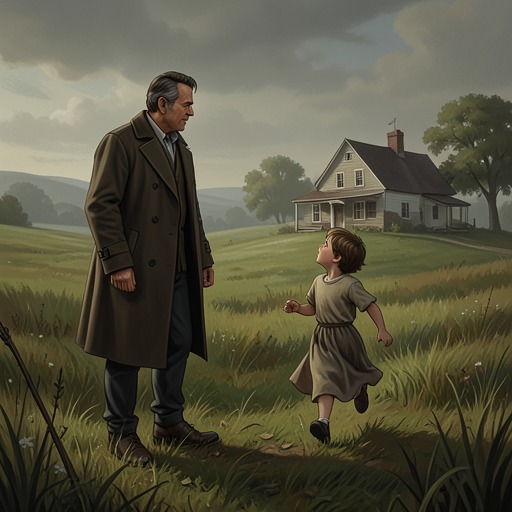
At twelve, [Trond](entity:character-recall-character-trond-a5f5d97514f1) watches German troops march through [Oslo](entity:location-recall-location-oslo-aa85218d6b1a) with his father. The city falls quiet beneath the boots and aircraft, and his father leads him away without explaining what the invasion will mean for their family.
The moment becomes an early measure of his father’s silences: Trond senses danger and change, but cannot yet understand the private life his father is beginning to live.
After April 1940
The Father’s Wartime Absences
During the occupation, [Trond’s father](entity:character-recall-character-trond-39bb6e75058a) repeatedly leaves home for long stretches. [Trond](entity:character-recall-character-trond-a5f5d97514f1) and his sister continue their ordinary routines, while their mother carries the burden of waiting and the children imagine the journeys they will make with their father after the Germans are defeated.
Trond does not know that his father is working for the [Norwegian Resistance](entity:organization-recall-organization-norwegian-resist-6936b1b41a8c). The unexplained departures deepen the boy’s longing for him and establish the gap between the father Trond sees and the life he keeps hidden.
1942
A Hidden Base by the River
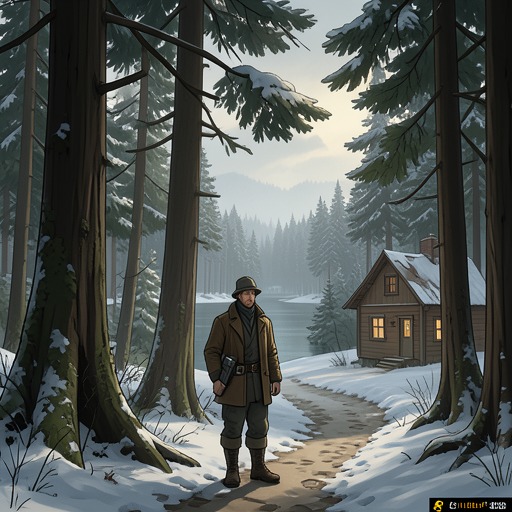
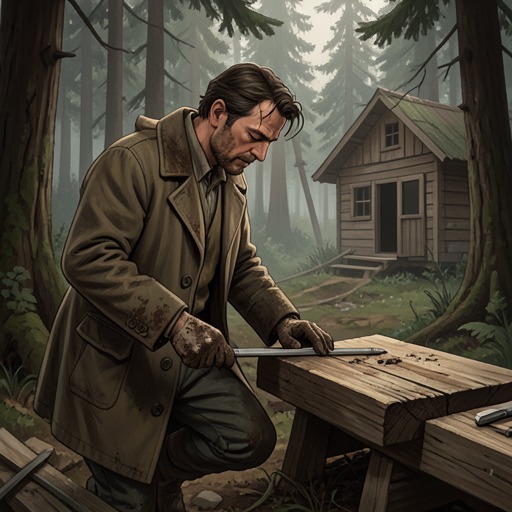
Seeking a discreet place near the Swedish border, [Trond’s father](entity:character-recall-character-trond-39bb6e75058a) finds an abandoned smallholding by the river. [Franz](entity:character-recall-character-franz-a77eb1706f2e) helps him secure the cabin, which lies beyond the village and offers a plausible reason for his movements: he can appear to be repairing the property and working its land.
The place gives Trond’s father a base for the Resistance route. It also becomes the landscape [Trond](entity:character-recall-character-trond-a5f5d97514f1) will later remember as the setting of his most intimate summer with his father.
1942 to 1944
The Traffic Across the Border
For about two years, [Trond’s father](entity:character-recall-character-trond-39bb6e75058a) helps move messages, papers, films, and eventually people toward [Sweden](entity:location-recall-location-sweden-0f697902ba54). He builds a cover through ordinary work at the cabin and friendly conversations with German guards, while trusted villagers sometimes handle the final crossing.
[Jon’s mother](entity:character-recall-character-jon-5ef0685e49ed) assists, and [Franz](entity:character-recall-character-franz-a77eb1706f2e) remains one of the few people who knows what is really happening. The village’s close attention to everyone’s habits makes secrecy both essential and precarious.
Early July 1948, shortly after Odd’s death
Stealing Horses
[Jon](entity:character-recall-character-jon-ad4211c3f23b) arrives at [Trond](entity:character-recall-character-trond-a5f5d97514f1)’s cabin and says they are going out stealing horses. They row across the river and enter [Barkald](entity:character-recall-character-barkald-bac45cc1fd2d)’s wooded paddock, where Jon sends two horses galloping toward Trond’s chosen birch tree.
Trond drops from a branch onto a horse’s back. For a moment he is overwhelmed by pain and fear, then exhilarated by the ride and the forest sounds around him. The horse turns sharply at the fence and throws him over the wire.
The morning of the horse ride, July 1948
The Fall at the Fence
[Trond](entity:character-recall-character-trond-a5f5d97514f1) lands in the heather, briefly unable to recognize his body, and fears he may be paralyzed. [Jon](entity:character-recall-character-jon-ad4211c3f23b) finds him, hands over his shoes, and asks if he will get back on the horse; Trond refuses, hurt and shaken.
As they walk into the forest, Trond remembers his father’s lesson about pain and stops limping. The small act of self-command helps him keep pace with Jon, though it cannot prepare him for what happens at the nest.
Later on the horse-ride morning, July 1948
The Broken Goldcrest Nest
[Jon](entity:character-recall-character-jon-ad4211c3f23b) leads [Trond](entity:character-recall-character-trond-a5f5d97514f1) up a spruce to show him a tiny goldcrest nest and one of its eggs. Trond marvels that an egg so small can become a living bird capable of flight.
Jon abruptly drops the egg, tears the nest apart, and crushes it, then collapses at the tree’s foot in a private anguish Trond cannot understand. Trond feels responsible without knowing why, and the episode makes the morning’s exhilaration turn strange and ominous.
Later on the horse-ride morning, July 1948
The Thunderstorm Begins
After [Jon](entity:character-recall-character-jon-ad4211c3f23b) walks away, the weather breaks. Wind whips the trees, lightning flashes across the ridge, and heavy rain turns the landscape into a wall of water as [Trond](entity:character-recall-character-trond-a5f5d97514f1) hurries back toward the river.
He is cold, exhausted, and confused by Jon’s silence. Jon is waiting in a boat and rows him across the swollen current without explanation, then leaves without answering Trond’s farewell.
The afternoon after the horse ride, July 1948
A Father’s Care
[Trond](entity:character-recall-character-trond-a5f5d97514f1) reaches the cabin drenched and shaking. His father warms him by the stove, rubs him dry with a towel, finds clean clothes, and feeds him bacon, eggs, and bread until he falls asleep at the table.
The ordinary tenderness makes the cabin feel safe, but Trond’s morning has altered his sense of the people around him. He later tells his father about the horse ride and [Jon](entity:character-recall-character-jon-ad4211c3f23b)’s destruction of the nest.
The day after Odd’s death, July 1948
The Story of the Gunshot
[Trond’s father](entity:character-recall-character-trond-39bb6e75058a) tells him what people in the shop have heard about [Odd](entity:character-recall-character-odd-a67fd3b1967d)’s death. [Jon](entity:character-recall-character-jon-ad4211c3f23b) had forgotten to make his gun safe; [Lars](entity:character-recall-character-lars-982c7d06e766) had picked it up while playing and fired, killing his twin brother by accident.
Jon’s father changes his bloodied clothes, lays Odd on the marriage bed, and leaves to fetch the boys’ mother. Before going, he tells Jon to look after Lars. The family’s grief is compounded by the impossible burden placed on the surviving brothers.
The day of Odd’s death, July 1948
The Brothers at the River
After their father leaves with [Odd](entity:character-recall-character-odd-a67fd3b1967d)’s body, [Jon](entity:character-recall-character-jon-ad4211c3f23b) takes [Lars](entity:character-recall-character-lars-982c7d06e766) fishing in a boat. They spend hours on the river, perhaps without speaking, and return to wait in the barn rather than enter the house.
When their mother comes home, Jon and Lars hold hands as the cart approaches. Their mother asks where Odd is, and their father still cannot tell her; the family’s shock has left everyone stranded in silence.
Three days after Odd’s death, July 1948
Odd’s Funeral
[Trond](entity:character-recall-character-trond-a5f5d97514f1) attends [Odd](entity:character-recall-character-odd-a67fd3b1967d)’s funeral with his father. At the grave, [Jon](entity:character-recall-character-jon-ad4211c3f23b)’s father and [Trond’s father](entity:character-recall-character-trond-39bb6e75058a) shake hands but never meet each other’s eyes.
[Lars](entity:character-recall-character-lars-982c7d06e766) breaks away from his mother and runs in circles around the churchyard while the priest speaks. A neighbor eventually catches him, but the sight confirms for Trond that the summer has changed irreversibly: he believes he and Jon will never steal horses together again.
The days after Odd’s funeral, July 1948
Jon’s Absence
For several days, [Trond](entity:character-recall-character-trond-a5f5d97514f1) wakes expecting [Jon](entity:character-recall-character-jon-ad4211c3f23b) to appear at the cabin, but the path and river remain quiet. Each time Jon fails to arrive, Trond feels both relief and shame, unable to decide whether he wants the friendship to resume.
He and his father begin the work they came to do, rowing across the river and preparing to fell the trees. Neither asks the other about Jon or the grief at his family’s farm.
Several days after the funeral, July 1948
The Haymaking Bargain
[Barkald](entity:character-recall-character-barkald-bac45cc1fd2d) asks [Trond and his father](entity:relation-recall-relation-8a809cbb2c2d) to help with haymaking. They joke their way through a negotiation and secure Brona, a horse, in exchange for their labor—a practical arrangement that will help with the coming timber work.
The exchange reveals [Trond](entity:character-recall-character-trond-a5f5d97514f1)’s quickness and his father’s delight in it. It also gives Trond a chance to watch the adults in the valley working together after the funeral has unsettled their lives.
During haymaking, July 1948
Working Beside Jon’s Mother
In the meadow, [Trond and his father](entity:relation-recall-relation-8a809cbb2c2d) see [Jon’s mother](entity:character-recall-character-jon-5ef0685e49ed) in a new light: grief has not erased her vitality. [Trond](entity:character-recall-character-trond-a5f5d97514f1) is embarrassed by the awareness that his father notices her too, and his father laughs softly at the boy’s reaction.
Trond struggles with the heavy wire reel, remembering the nettles and refusing to let his pain show. His father quietly tells him he has done well, and the praise restores his confidence.
Later in July 1948
The Logging Begins
[Trond’s father](entity:character-recall-character-trond-39bb6e75058a) begins felling the trees on their land and sending the timber toward [Sweden](entity:location-recall-location-sweden-0f697902ba54). [Jon](entity:character-recall-character-jon-ad4211c3f23b)’s father, [Franz](entity:character-recall-character-franz-a77eb1706f2e), and Brona help with the demanding work; [Trond](entity:character-recall-character-trond-a5f5d97514f1) trims branches and throws himself into the labor until the smell of resin seems to become part of him.
Trond discovers his father’s authority among the adult workers and sees that his father’s confidence is not merely a private father-son performance. He also watches [Jon’s mother](entity:character-recall-character-jon-5ef0685e49ed)’s arrival intensify his father’s energy and his own confused desire.
During the logging, late July 1948
The Timber-Pile Accident
As [Trond’s father](entity:character-recall-character-trond-39bb6e75058a) and [Jon](entity:character-recall-character-jon-ad4211c3f23b)’s father compete to raise another log onto the timber pile, [Trond](entity:character-recall-character-trond-a5f5d97514f1) stands beside [Jon’s mother](entity:character-recall-character-jon-5ef0685e49ed). He puts an arm around her, and the men notice; the distraction contributes to the log swinging out of control.
The log strikes Jon’s father’s ankles and breaks his leg before he falls. Jon’s mother runs to him, while Trond feels anger toward his own father for ruining what had seemed like a perfect moment, even as the family’s grief makes the injury feel like another blow.
The evening of the timber-pile accident, late July 1948
The Rain Shower
After [Jon](entity:character-recall-character-jon-ad4211c3f23b)’s father is taken for medical care, [Trond and his father](entity:relation-recall-relation-8a809cbb2c2d) sit through a darkening storm. They strip and run into the rain, washing the soap from their bodies before returning to warm themselves by the stove.
His father admits that the dangerous competition was unnecessary and that he should have stopped it. [Trond](entity:character-recall-character-trond-a5f5d97514f1) resents being left out of the adult responsibility, but exhaustion overtakes him before he can resolve what his father’s confession means.
The night after the accident, late July 1948
The Father’s Empty Bunk
[Trond](entity:character-recall-character-trond-a5f5d97514f1) wakes to find his father absent, though the man had said he would follow him to bed. The cabin is quiet, the rain has stopped, and his father’s bunk is made as if untouched.
The absence unsettles Trond after the day’s admission and intimacy. It foreshadows his growing realization that his father’s life contains rooms and relationships the boy cannot enter.
The following morning, late July 1948
The Kiss Across the River
After sleeping in a cowshed, [Trond](entity:character-recall-character-trond-a5f5d97514f1) sees his father and [Jon’s mother](entity:character-recall-character-jon-5ef0685e49ed) sitting close together on the opposite bank. His father kisses her while she cries, and Trond understands that their relationship is more intimate than his own brief embrace with her.
He cannot think of his mother or make sense of what he has witnessed. Rather than return to the cabin, he walks to [Franz](entity:character-recall-character-franz-a77eb1706f2e)’s house, carrying the image with him and sensing that nothing can simply return to how it was.
After the kiss, late July 1948
Franz Reveals the Past
[Franz](entity:character-recall-character-franz-a77eb1706f2e) tells [Trond](entity:character-recall-character-trond-a5f5d97514f1) that his father had used the cabin as a Resistance base during the war and that [Jon’s mother](entity:character-recall-character-jon-5ef0685e49ed) had helped with the secret traffic. He describes the German occupation, the fugitive’s death, the bridge bombing, and the escape to [Sweden](entity:location-recall-location-sweden-0f697902ba54).
Trond learns that his father had built a second life in the valley while his family in [Oslo](entity:location-recall-location-oslo-aa85218d6b1a) knew nothing of it. The revelation changes how he sees the river, the village, and the man he thought he knew completely.
During the final days of logging, late July 1948
Lars’s Grief Takes Shape
While the adults prepare food by the river, [Lars](entity:character-recall-character-lars-982c7d06e766) makes a tiny stack of twigs that imitates the timber piles. [Trond](entity:character-recall-character-trond-a5f5d97514f1) praises it, but Lars insists it is only a few twigs before quietly admitting that he shot his brother.
Trond tells him it was an accident and that he could not have known the gun was loaded. Lars remains behind while Trond joins the adults, unable to be drawn out of his private grief.
The same day as Lars’s confession, late July 1948
Trond Challenges the Adults
At the meal, [Trond](entity:character-recall-character-trond-a5f5d97514f1) sees his father and [Jon’s mother](entity:character-recall-character-jon-5ef0685e49ed) sitting close together and feels excluded from their adult world. He pushes himself between them on the log, using a loud, sharp manner to disrupt their intimacy.
The gesture is partly a protest against being left outside the truth and partly an attempt to claim a place in a relationship he cannot understand. His father stiffens, while Trond forces himself into the meal as if nothing has happened.
After the logging, late July 1948
The Timber Launch
[Trond’s father and Franz](entity:relation-recall-relation-439947109593) try to release the stacked timber into the river by pulling on ropes, then cut the supporting stays with axes. The pile breaks loose in a rush, sending many logs into the water; the remaining trunks are pushed free one by one.
[Trond](entity:character-recall-character-trond-a5f5d97514f1) is weakened by a painful knee and an unaccountable heaviness. He sleeps beneath the memorial cross at the river, where the timber work and the wartime death remembered there meet in his mind.
The day after the timber launch, late July 1948
The Jam in the Rapids
The group finds that some logs have jammed farther downriver. [Trond’s father](entity:character-recall-character-trond-39bb6e75058a) is discouraged, but [Trond](entity:character-recall-character-trond-a5f5d97514f1) studies the tangle and proposes looping a rope around the log that is holding the rest in place.
Trond swims into the cold current, climbs across the unstable timber, and fastens the rope underwater. With the horse pulling from shore, the jam breaks and the logs move downstream, giving [Trond and his father](entity:relation-recall-relation-8a809cbb2c2d) a moment of shared satisfaction.
After the river work, August 1948
The Ride into Sweden
[Trond’s father](entity:character-recall-character-trond-39bb6e75058a) takes him on a three-day ride with [Barkald](entity:character-recall-character-barkald-bac45cc1fd2d)’s horses. They cross [Furufjellet](entity:location-recall-location-furufjellet-06130d1ae322) and enter [Sweden](entity:location-recall-location-sweden-0f697902ba54), where [Trond](entity:character-recall-character-trond-a5f5d97514f1) feels the difference of crossing a border even though the forest looks much the same.
At a river jam, Trond again takes the initiative, swimming out and securing a rope so the horse can pull the obstructing log free. His father recognizes his courage, and for a time the boy feels capable and close to him.
Late summer 1948
The Last Farewell
[Trond’s father](entity:character-recall-character-trond-39bb6e75058a) puts him on the bus to travel home to [Oslo](entity:location-recall-location-oslo-aa85218d6b1a), promising that he will finish his work and follow. He tells [Trond](entity:character-recall-character-trond-a5f5d97514f1) to take in what has happened, think about it later, and never grow bitter.
Trond hears the promise as familiar but senses that it may not be true. As the bus carries him away, he watches his father disappear around the bend, unable to know that this will be their last meeting.
Late summer 1948
Waiting at the Station
After returning to [Oslo](entity:location-recall-location-oslo-aa85218d6b1a), [Trond](entity:character-recall-character-trond-a5f5d97514f1) repeatedly cycles to [Østbane Station](entity:location-recall-location-stbane-station-387a3f126af2) to wait for the train from [Elverum](entity:location-recall-location-elverum-295dbf53b08b). He believes his father will come home as promised, and each journey begins with hope.
The train arrives without his father. When the rains come, Trond gradually stops making the trip, feeling that a curtain has fallen over the life he expected to resume.
Late autumn 1948
The Letter from Elverum
A letter arrives from [Trond’s father](entity:character-recall-character-trond-39bb6e75058a), addressed to [Trond’s mother](entity:character-recall-character-trond-43763a5f960b) and listing all three family members inside. He thanks them for their time together, says he will not return, and authorizes Trond’s mother to collect the money owed for the timber in [Karlstad](entity:location-recall-location-ebfcde379f9f).
[Trond](entity:character-recall-character-trond-a5f5d97514f1) is hurt that the letter contains no special greeting to him. His mother is bewildered by the small timber payment, while the boy understands that his father’s disappearance has become a permanent fact.
Autumn 1948
The Journey to Karlstad
[Trond](entity:character-recall-character-trond-a5f5d97514f1) accompanies his mother by train to [Karlstad](entity:location-recall-location-ebfcde379f9f) to collect the timber money. In the unfamiliar town, he loses patience as they search for the bank and nearly attacks a man who cannot understand his question.
He sees that striking the stranger would commit him to an irreversible path and lets the moment pass. The choice becomes one of the examples through which he understands that actions shape the life that follows.
The same day in Karlstad, autumn 1948
The Blue Suit
The bank gives [Trond’s mother](entity:character-recall-character-trond-43763a5f960b) only 150 kroner, and currency restrictions mean the money must be spent in [Sweden](entity:location-recall-location-sweden-0f697902ba54). She takes [Trond](entity:character-recall-character-trond-a5f5d97514f1) to a clothes shop and buys him a dark blue suit, which fits him perfectly.
Seeing himself in the mirror, Trond feels transformed from a boy into someone else. He and his mother walk arm in arm afterward, sharing a rare, light moment that they will never repeat.
Years after 1948
Lars Leaves the Farm
[Lars](entity:character-recall-character-lars-982c7d06e766) says he left home on his twentieth birthday and never returned, cutting himself off from his mother and the farm he had expected to inherit. After years at sea, [Jon](entity:character-recall-character-jon-ad4211c3f23b) came back and claimed the farm as his right, though Lars believed his brother was not fit to run it.
Lars’s account reveals how [Odd](entity:character-recall-character-odd-a67fd3b1967d)’s death and the family’s silence continued to govern the brothers’ lives. His exile was not a clean escape but a lasting estrangement from the only home and work he had known.
Adulthood, before 1996
A Life in the City
[Trond](entity:character-recall-character-trond-a5f5d97514f1) builds a working life and has two daughters with his first wife. He later marries again, and his life includes further relationships and separations; he becomes a father whose long absences and inwardness leave their mark on his children.
His elder daughter, [Ellen](entity:character-recall-character-ellen-35bd441f3a33), remembers him reading Dickens and appearing lost in his books. Trond’s later reflection makes clear that his daughters knew his habits and facts more readily than the feelings he kept to himself.
Three years before the present-day story
The Deaths of His Wife and Sister
[Trond](entity:character-recall-character-trond-a5f5d97514f1)’s second wife dies in a road collision that he survives. His sister dies of cancer during the same month, and the two women, who had become close friends, leave him bereaved on several fronts.
Afterward, Trond loses interest in conversation and stops wanting to continue his working life. His losses set in motion the retreat and relocation that will define his final years.
1999, before early November
The Move to The Top
At sixty-seven, [Trond](entity:character-recall-character-trond-a5f5d97514f1) buys a neglected house overlooking a lake in eastern [Norway](entity:location-recall-location-norway-64019b7a3249) and names it [The Top](entity:location-recall-location-the-top-719c71b1a812). He intends it to be his final home, where he can live alone, repair the house slowly, and keep his days organized by physical work.
He adopts [Lyra](entity:character-recall-character-lyra-ea26d535e898) from an animal sanctuary and makes a routine of walks, stove-lighting, and careful meals. He chooses not to install a television or telephone, hoping to protect his solitude from distraction and demands.
A few weeks after the move, autumn 1999
The Lynx on the Road
While driving near the sawmill, [Trond](entity:character-recall-character-trond-a5f5d97514f1) swerves into a ditch to avoid a timber truck. When he looks up, a lynx stands near the car before walking away, leaving him intensely alert and grateful to be alive.
At the village shop, people dismiss the sighting as a dog. Trond keeps the image to himself as a private confirmation that the forest still holds unexpected life.
Early November 1999
The Neighbor in the Night
A dog whistle wakes [Trond](entity:character-recall-character-trond-a5f5d97514f1), who sees his neighbor [Lars](entity:character-recall-character-lars-982c7d06e766) searching the road for [Poker](entity:character-recall-character-poker-a2267b1e4de7). Trond goes outside to keep him company, and the two men find the dog standing behind them, growling at Lars.
Lars tells Trond about the Alsatian he once shot while trying to save roe deer. The story stirs a deep compassion in Trond, though neither man understands why it affects him so strongly.
The next evening, early November 1999
The Recognition at Supper
[Lars](entity:character-recall-character-lars-982c7d06e766) comes to [Trond](entity:character-recall-character-trond-a5f5d97514f1)’s house with [Poker](entity:character-recall-character-poker-a2267b1e4de7) and accepts an invitation to supper. Over the meal, he says he knows who Trond is; Trond confirms that he recognizes Lars too, connecting the neighbor to the ten-year-old boy from 1948.
The meeting draws the past across the fifty years Trond thought had separated him from it. Lars leaves satisfied by the simple recognition, while Trond feels invaded and goes out into the wind with [Lyra](entity:character-recall-character-lyra-ea26d535e898).
The following night and morning, November 1999
The Gale Fells the Birch
A gale shakes [Trond](entity:character-recall-character-trond-a5f5d97514f1)’s house through the night. By morning, a huge birch has fallen across his yard, blocking his car and woodshed and damaging the gutter.
The practical problem suddenly feels like a trap. Trond’s back is sore, his resources seem less certain than he thought, and the fallen tree triggers a rush of memories about the summer of 1948 and his father’s final departure.
The morning after the gale, November 1999
Trond Collapses
Overwhelmed by the fallen tree and the memory it unleashes, [Trond](entity:character-recall-character-trond-a5f5d97514f1) lies down in his clothes. When he gets up, dizziness sends him crashing to the floor, and he briefly fears he may die alone in a house without a telephone.
He manages to stand, takes [Lyra](entity:character-recall-character-lyra-ea26d535e898) for a walk, and vomits beside the lake. The episode forces him to confront the vulnerability he had hoped solitary living and purposeful work could keep at a distance.
Later that morning, November 1999
Lars Helps Clear the Yard
[Trond](entity:character-recall-character-trond-a5f5d97514f1) returns to find [Lars](entity:character-recall-character-lars-982c7d06e766) waiting with a chainsaw. Together they cut branches from the fallen birch and clear the way to the woodshed, working carefully despite their age and aching backs.
Trond watches Lars’s movements and learns from the practical rhythm of the work. Their shared labor gives Trond relief from isolation and restores a sense that the day can still be managed.
The afternoon and evening after the gale, November 1999
Snow and a Shared Meal
As the men work, snow begins to fall and [Trond](entity:character-recall-character-trond-a5f5d97514f1) admits that he fears being snowed in. [Lars](entity:character-recall-character-lars-982c7d06e766) reassures him that a local farmer clears the road, and Trond realizes he has already arranged the same service.
They finish the yard’s immediate work, then share bread, coffee, and warmth indoors. Lars tells Trond that he was meant to inherit the farm, that [Jon](entity:character-recall-character-jon-ad4211c3f23b) later claimed it, and that Lars himself left home at twenty and never saw his mother again.
That night and early morning, November 1999
The Snowplow Arrives
[Trond](entity:character-recall-character-trond-a5f5d97514f1) wakes in the night, reads the end of [A Tale of Two Cities](entity:object-recall-object-f2bb26833e9b), and returns to bed. Before dawn, he hears the tractor and snowplow clear the road to his house.
The reliable arrival lets him sleep without questioning the arrangement. It is a small but meaningful acceptance of help, in contrast to his original plan to manage every difficulty alone.
The morning after the snowfall, November 1999
Ellen Finds the House
[Trond](entity:character-recall-character-trond-a5f5d97514f1) walks through the snow to the lake and remembers his father’s return from [Sweden](entity:location-recall-location-sweden-0f697902ba54) after the war. On his way home, he finds [Ellen](entity:character-recall-character-ellen-35bd441f3a33) waiting beside her car; she has spent weeks tracing his address because he has no telephone and has not told his daughters where he moved.
She hugs him, angry and relieved, and Trond lets her in for coffee. Her unannounced visit disrupts his solitude, but he is frightened by the prospect that she might leave and tells her not to go.
Later that day, November 1999
A Daughter’s Questions
Over breakfast, [Ellen](entity:character-recall-character-ellen-35bd441f3a33) asks how [Trond](entity:character-recall-character-trond-a5f5d97514f1) is really doing. He describes his routines and his neighbor, then listens as she recalls his habit of reading Dickens and quotes the opening of [David Copperfield](entity:object-recall-object-9e6226528176), which had once frightened her with the possibility that someone else might become the hero of her life.
Her words expose a fear Trond has also carried but never voiced. He has wondered whether he himself became an observer in his own life, and whether [Lars](entity:character-recall-character-lars-982c7d06e766) somehow occupied the place that belonged to him beside his father.
The evening of the same day, November 1999
Ellen’s Departure
[Ellen](entity:character-recall-character-ellen-35bd441f3a33) asks whether [Trond](entity:character-recall-character-trond-a5f5d97514f1) would rather she had not come. He admits that he does not know, then quickly tells her not to leave; she assures him she had no intention of going yet and suggests he get a telephone.
After walking with [Lyra](entity:character-recall-character-lyra-ea26d535e898) and spending several hours in the house, Ellen drives away at dusk. Trond is glad she knows where he lives, but the rooms feel emptier after her departure, leaving his chosen solitude newly unsettled.